
Searching the Three Way Court Docket
There is no city portal to open first. The official Three Way municipal code says plainly that the city has no municipal court. It sends judicial matters to the proper Madison County court. So pull out the paper that created the matter. A citation, summons, notice, judgment, or prior letter should name an issuing agency or court. It should also give a division or case number. Those details set the route for any Three Way court record.
- Read the citation or notice and copy the court name, issuing agency, case number, date, and record type.
- Ask the county clerk whether the matter belongs in General Sessions, Circuit/Criminal, Chancery, or Juvenile/Probate.
- Use an official calendar only to check a public setting, not as proof of the whole case history.
- Call the responsible clerk or use documented counter access if no online result appears.
- Request the exact filing, order, judgment, or certified copy needed and confirm any date before appearing.
A full name helps, but it should never be the only key you give the clerk. Add the case or citation number, the approximate year, the division, and the type of document whenever you can.
The Three Way Court Referral Rule
Here is the local fact people miss most. An incorporated city does not always get its own trial court. Three Way is incorporated, yet its combined code says no city court exists. Every judicial matter inside the city goes to the proper Madison County court. That single rule explains the empty hunt. A Three Way municipal docket turns up nothing like the city docket library Jackson keeps.
Direct answer: A Three Way judicial record should be sought from the Madison County court named on the case paper, not from an assumed city court.
The referral does not dump every city matter into one county division. Lower-level civil, criminal, and traffic work may land in General Sessions, while major civil and criminal cases can reach Circuit/Criminal Court. Chancery and Juvenile/Probate keep records of their own. The case type and the court label on the paper control the handoff.
Three Way Municipal Court Basics
Three Way has no active municipal court. It posts no city hearing calendar and no trial docket portal to search. Treat the city code as a jurisdiction check. It sends judicial matters straight to Madison County. City Hall can explain a city notice. It can point to the department that issued an administrative record. It cannot replace the county clerk who holds a court case file. The official MTAS Three Way profile lists Susan Rogers as City Recorder. She also serves as City Court Clerk. Read that title next to the no-court provision. It does not mean the city runs a separate trial docket. City Hall sits at 190 Three Way Lane. It is open Monday through Thursday from 8 a.m. to 3 p.m., and its phone is 731-784-7782.
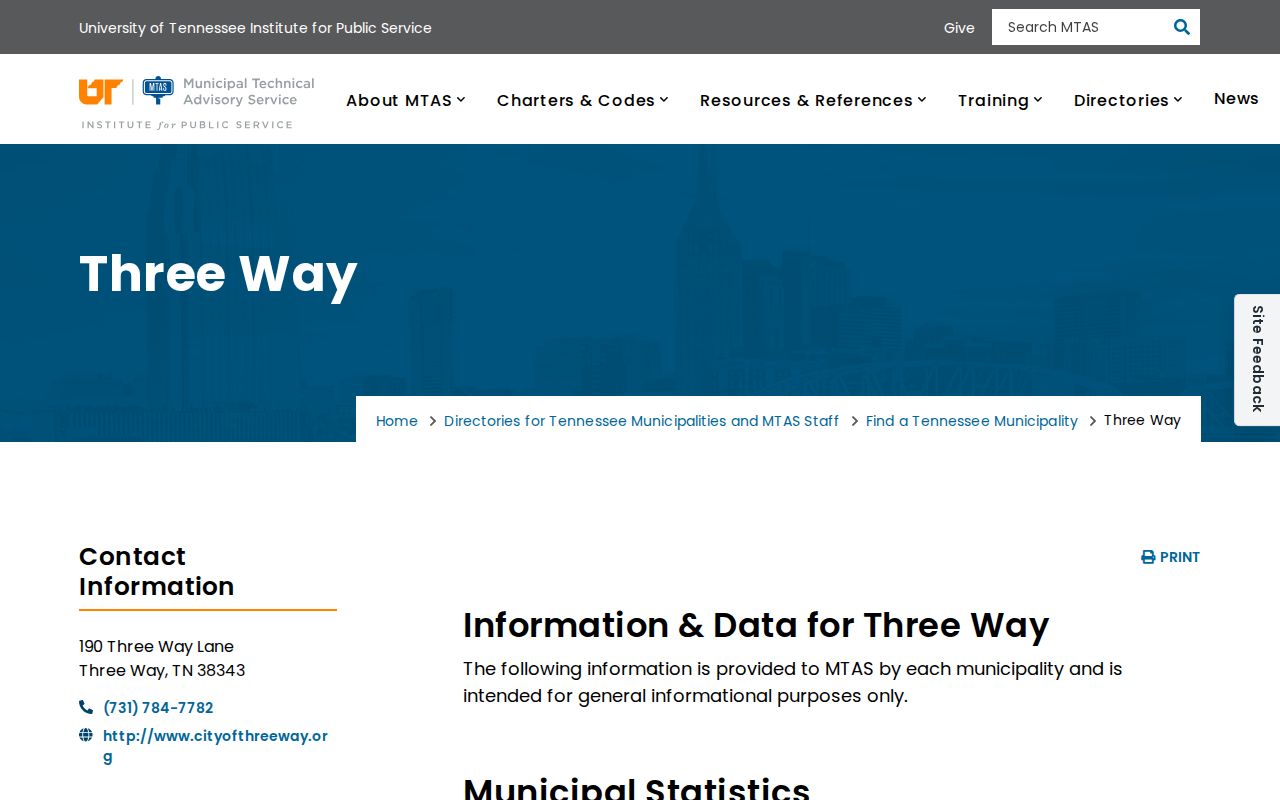
The profile helps separate a city-office question from a judicial record held by Madison County.
Three Way City or Court Records
Not every record tied to Three Way belongs to a court. City Hall handles administrative records, municipal ordinances, and meeting material. It can also name the city department you need. A court docket belongs with the court clerk instead. So does a citation case, a filed pleading, a hearing entry, an order, or a judgment. Blend the two paths and you may get a blank search. A referral may look like a dead end.
| Question | Three Way starting point | What to provide |
|---|---|---|
| City administrative record | Three Way City Hall | Department, date range, type, keywords |
| Traffic or lower-level case | General Sessions clerk | Citation, agency, name, setting date |
| Major criminal or civil file | Circuit Court Clerk | Case number, year, division, document |
| Chancery or juvenile/probate | Specialized county clerk | Court label, case type, access question |
If the paper is unclear, ask City Hall which department created it. Then ask the county clerk to confirm whether a judicial file exists.
Court Dates and Settings in Three Way
Any Three Way court date will be a setting in the Madison County court that took the referral. No separate city calendar controls it. County sources publish recurring General Sessions times. They also list yearly Circuit schedules, but a notice or a later order controls the individual case. When a general web schedule conflicts with the date on your paper, call the clerk named on that paper.
| Date | The setting date on the citation, summons, notice, calendar, or later order. |
|---|---|
| Time | The listed session time; check-in or a case order may affect arrival. |
| Court | The Madison County court receiving the Three Way matter. |
| Division | The General Sessions, Circuit/Criminal, Chancery, or Juvenile/Probate assignment. |
| Setting type | Arraignment, appearance, trial, motion, docket call, or other event. |
| Status | A current action such as reset or disposition that needs source context. |
A setting is not always a trial. A docket call may simply review status and deadlines. An appearance tells you little about the result, and a reset means the event moved, not that the Three Way case ended.
No Three Way Docket Result
A blank result is expected, since Three Way has no municipal court. It is not proof that no judicial record exists. The case may sit in Madison County. It can be indexed by citation number, county case number, party name, date, or division. It may appear only on a schedule. It may live in a paper file, sit in off-site storage, or fall under a lawful access restriction.
To recover the search, call the clerk. Name the issuing agency, the case type, and the date. Ask whether the record sits in General Sessions or another county court. When an older case is not online, ask how it can be inspected. For an appeal, use Tennessee Public Case History. It covers appellate history rather than the original Three Way trial matter. A federal case calls for the Western District of Tennessee route.
Note: A blank Three Way search should trigger a jurisdiction check. Never assume the citation, setting, or case vanished.
Traffic Tickets in Three Way
A traffic ticket written in Three Way should tell you two things: who wrote it and which court will hear it. The city has no court. So don't waste time looking for a Three Way municipal traffic docket. Tickets from the Madison County Sheriff and the Tennessee Highway Patrol go to Madison County General Sessions instead. Its criminal/traffic division handles ticket and court-record questions at 731-423-6128.
The Madison County Dockets page sets county traffic court on Wednesday at 8:30 a.m. Check-in is at 8 a.m. Processing is first-come, first-served. The date printed on your citation, or a later notice, controls. If the two disagree, confirm before the setting. The county links CourtFeePay for payments, but no universal citation-number lookup exists.
Keep payment and case research separate. A pay page won't show the full Three Way court record. Paying is not a statement about a contested charge. For the county-level process, see the Madison County traffic-ticket record page.
Reading the Three Way Court Code
Think of the Three Way combined code as an access instruction. It answers the first question any searcher has: which court? The no-court provision routes all judicial matters to Madison County. Read that sentence alongside the municipal profile. Don't rely on the "City Court Clerk" title alone. The code gives the routing fact. The profile supplies City Hall identity and contact context.
- Municipal court
- A city-level court. Three Way states that it does not have one.
- Referral
- Direction of a judicial matter to the appropriate Madison County court.
- City recorder
- A municipal record role that does not create an active Three Way trial docket.
- Docket
- A case register, hearing list, docket-call schedule, or calendar, depending on the source.
- Custodian
- The office that keeps the record and applies the access rules.
That distinction guards against a common mistake. A city title in a directory does not tell you where a citation, case entry, or order is actually filed.
Where Three Way Cases Go
Three Way judicial matters skip a city court entirely. They start in the proper Madison County court. General Sessions Division I is the likely county route. It handles lower-level civil, criminal, and traffic work. Circuit/Criminal Court handles the major civil and criminal record work described by county sources. Chancery keeps a separate clerk and calendar. Juvenile and local probate matters follow their own clerk route and access rules.
Docket flow: Three Way referral › Madison County court › Circuit/Criminal Court when jurisdiction and case stage require it
This is not a fixed ladder for every Three Way case. Some matters stay in General Sessions. Others belong in Chancery or Juvenile/Probate from day one. Identify the record type before you search. The broader Madison County court docket explains the county split without changing the city fact: Three Way has no municipal docket.
Three Way Court Access Context
Three Way was incorporated on February 1, 1998. Its MTAS municipal profile lists a 2025 Tennessee Department of Economic and Community Development certified population of 1,877. Those figures explain the county-referral model. A city this size can run its own administration without keeping a court calendar or trial docket.
For a look at the region's deep past, the Tennessee archaeology page for Pinson Mounds covers the nearby prehistoric mound site.
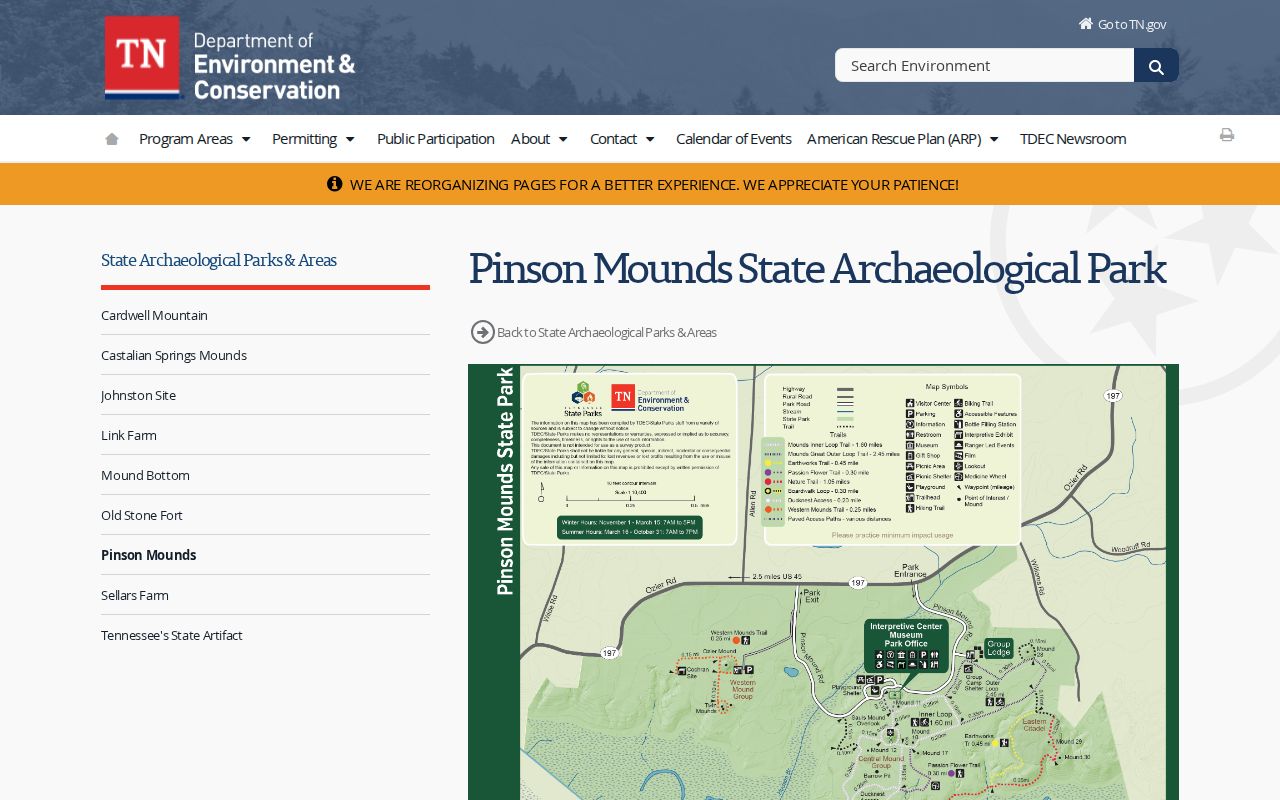
Geography aside, the Three Way docket process still runs through a Madison County court referral.
Three Way Court Record Fields
Once you find the right county file, treat each entry as a compressed procedural note. A Three Way court record may list a case number. It may also show court and division, party or defendant name, charge or claim, filing date, judge, hearing type, status, disposition, costs, and appeal information. Exact fields vary by Madison County court. Don't apply Jackson City Court's sample number pattern. Don't import its status layout to a referred Three Way matter either.
Decode the shorthand carefully. "Motion" means someone requested an order, not that the request won. "Appearance" marks a setting without saying who came or what happened. "Dismissed" needs the order and its basis before you can pin down the meaning. "Failure to appear" is an event, not a conviction. A certified copy is authenticated by the clerk, yet certification cannot defeat sealing or confidentiality.
When a Three Way docket abbreviation affects a due date, payment, status, or claimed outcome, ask for the source. Ask for the filing, minute entry, judgment, or certified record. The clerk's document, not a calendar label, carries the authoritative detail.
Three Way Court Record Access Rules
Judicial records tied to Three Way answer to Tennessee court-record law and the access policy of whatever Madison County court holds them. Public access is the starting rule. Even so, sealed records, confidential filings, protected personal information, juvenile material, and internal judicial work may be withheld or redacted. No broad city request can override a court order or a confidentiality rule.
Key rules:
Tennessee Supreme Court Rule 34 permits inspection while excluding sealed, confidential, and specified judicial-work material.
Tennessee Public Records Act guidance explains citizen access under Tenn. Code Ann. §10-7-503 and lawful exceptions.
Juvenile Rule 114 sets special access limits for dependency, neglect, delinquency, and unruly proceedings.
Ask the county clerk whether a record is open, partly open with redactions, inspection-only, or restricted by law or order. For city administration matters, go to Three Way City Hall and name the department, date range, and record precisely.