
Getting Madison County Court Records
No one website searches every Madison County trial-court file. The case type and the court come first. Gail Mooney serves as both Circuit Court Clerk and General Sessions Court Clerk, so Circuit/Criminal records sit in one division and General Sessions records in another. Chancery keeps its own Clerk and Master. Juvenile and local probate matters run through the Juvenile Court and General Sessions Division II system.
A solid Madison County court record request works each route on its own terms:
- Identify the court, division, case number, date range, and exact document, if known.
- Inspect Circuit records at the public computers or records room, or visit the correct clerk counter.
- Use the official Circuit or General Sessions form when an authenticated copy is needed.
- Call before mailing to confirm the office, current charge, delivery method, and payment instructions.
- Use the county PRRC for county records and Tennessee Public Case History for appellate records.
The Circuit Court page lists two public-access computers for on-site lookups. Keep one caution in mind: a missing web result never proves the file is absent.
Madison Court Record Custodians
Knowing which clerk holds what saves real time. Madison County court records are split by subject and court level. Circuit/Criminal keeps felony and misdemeanor files, larger civil matters, minutes, juror records, and appeal transfers. General Sessions handles small claims, detainers, evictions, protection orders, and traffic matters. It also tracks state warrants, costs, fines, and restitution. Chancery keeps its own pleadings and calendar. Its FAQ routes probate filings to General Sessions Division II.
Madison County Circuit Court Clerk
515 S Liberty Street, Suite 200
Jackson, TN
731-423-6035
General Sessions Court Clerk
515 S Liberty Street, Suite 300
Jackson, TN
Civil: 731-423-6016
Criminal/traffic: 731-423-6128
Chancery Clerk and Master
100 E Main Street, Suite 200
Jackson, TN
731-423-6030
Madison County Court Record Types
A Madison County court record is built in layers. The calendar layer comes first. It lists the date, time, judge, court, and type of event. Beneath it sits the register or minute layer. The clerk logs each filing, hearing action, judgment, and cost there as the case moves. The document layer is deeper still, holding pleadings, motions, warrants, indictments, exhibits, and signed orders. Money has its own layer too. Financial records in a Madison County court docket can show fines, restitution, balances, payments, and certifications. A docket search rarely stops at the hearing calendar alone.
- Circuit and Criminal minutes, filings, judgments, jury records, and appeal transfers
- General Sessions civil, criminal, traffic, detainer, protection-order, and payment records
- Chancery pleadings, orders, tax-sale material, and calendar events
- Probate files held through General Sessions Division II
- Appellate milestones, document history, and record information
Jackson City Court PDFs are snapshots of settings and outcomes. Ask the city clerk for the case file when a signed order is needed.
Madison Records Request Form
Madison County treats looking and copying as two different acts. Under its Public Records Policy, a request to simply inspect records does not have to be written. Copies are another matter. If you want copies, or inspection followed by copies, put the request in writing. Send it to the Public Records Request Coordinator or custodian. The form collects your contact information, a Tennessee citizenship choice, a description of the record, the request type, a delivery preference, and an estimate limit. Fill in each field before sending it on. The Madison County Form Center posts the official request and certification forms.
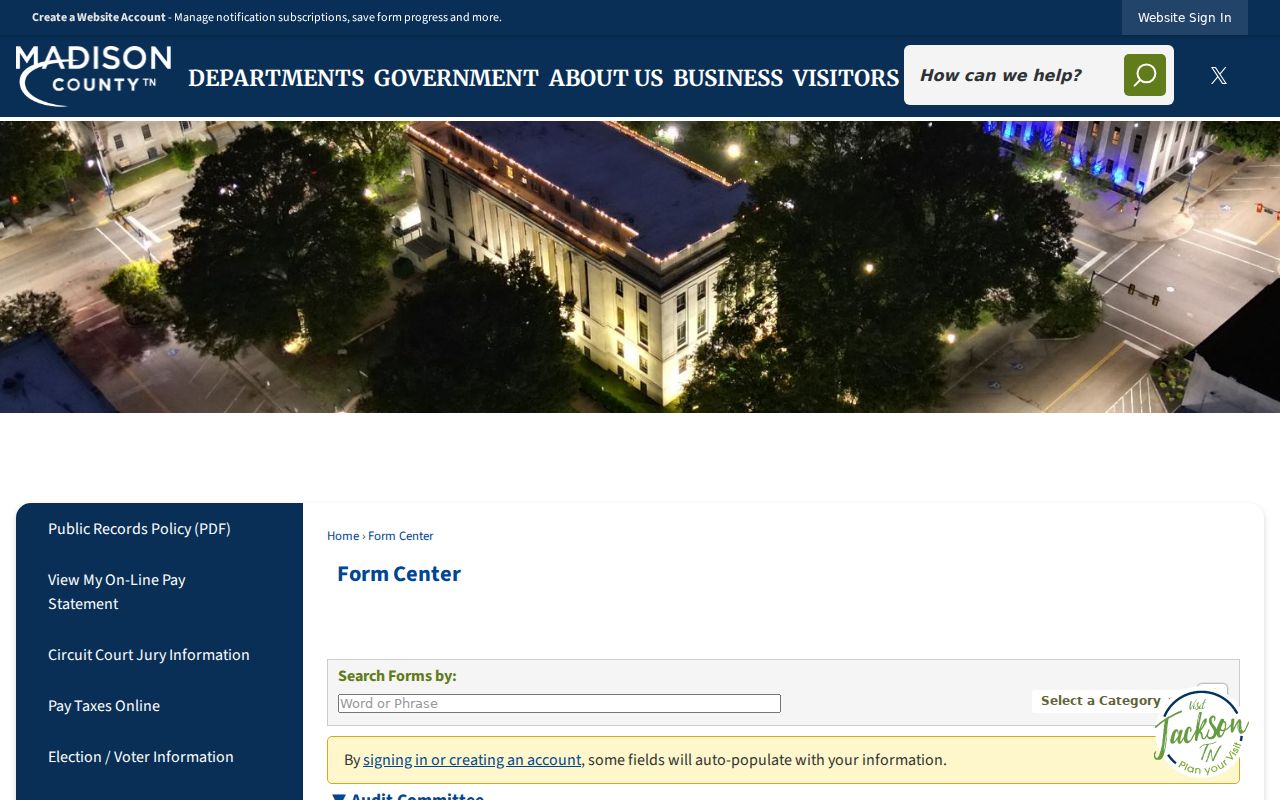
A records request form works when you already know the record you want. It is not a search tool. So name the court, the division, the case number, the date range, and the document itself rather than asking staff to build a report for you.
Inside a Madison County Court Record
What a Madison County court record shows depends on two things. Which court and which layer you pull matters. A Circuit calendar entry can be bare bones. Division, event, date, and time may be all you get. The clerk's case file usually holds far more. Tennessee Public Case History adds appellate milestones and full document history. It reaches appellate courts, though not every Madison County trial court.
| Case number | The identifier assigned by that court; formats differ among courts. |
|---|---|
| Case style | The caption or short title used for the matter. |
| Register or minutes | Filing events, hearings, orders, judgments, costs, and steps. |
| Documents | Pleadings, motions, exhibits, warrants, indictments, and signed orders when public. |
| Setting | A scheduled event, not proof of its outcome. |
| Appeal record | Notice, transmitted record, milestones, public documents, and disposition data. |
“Motion” does not mean granted. “Appearance” does not say what occurred. The filed paper, minute entry, judgment, or certified record gives the precise result.
Madison Public Records Policy
PRRC contact: The county policy gives the PRRC at 731-423-6059 and recordsrequest@madisoncountytn.gov. The county aims to respond promptly. Sometimes it cannot produce the records or deny the request right away. It should then send a response form within seven business days. Production may arrive in parts. A denial should cite a general basis. Confidential content should be redacted where possible rather than withheld outright. The Tennessee Comptroller FAQ spells out how specific a request must be. It also explains what counts as an existing record.
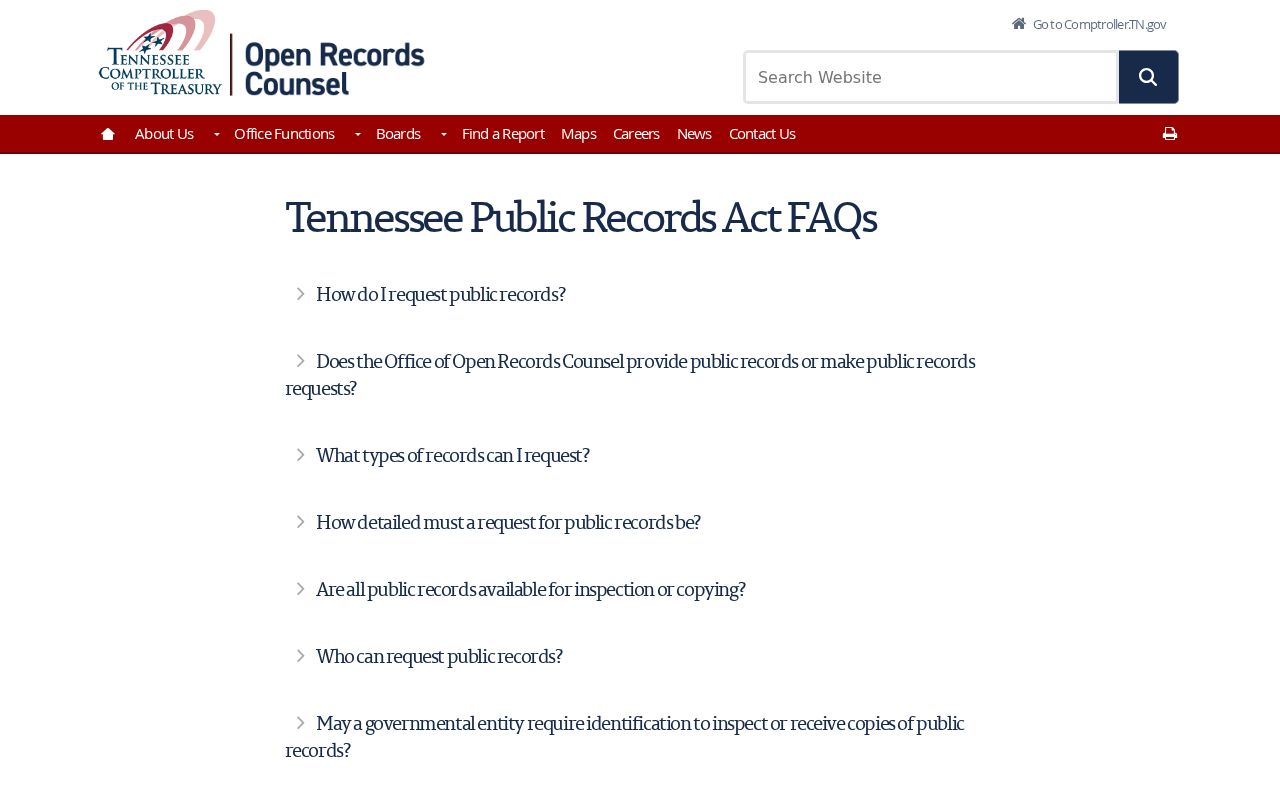
Send any court file request straight to the clerk who keeps it. That office works with Madison County records all day, so it can usually match a case number or point you to the right access route without much delay.
Fees and Certified Copies
Not every copy of a court record carries the same weight. A plain copy just reproduces the filing, while a certified copy bears the clerk's authentication. Fees differ by office in Madison County. Circuit charges $5 per certification plus $0.50 per page. Chancery lists $0.50 per page, $5 more per certified document, and $15 more for certification under Acts of Congress. General Sessions spells out its charges in its own form language.
| Item | Published amount | Scope |
|---|---|---|
| Circuit certified copy | $5 plus $0.50 per page | Circuit form |
| General Sessions certification copy/page | $5 | Form wording |
| General Sessions copy/page | $0.50 | Form wording |
| Chancery copy | $0.50 per page | Chancery FAQ |
| Chancery certification | $5 per document | Added to copies |
| County policy copy | $0.15 B&W; $0.50 color | General county records |
General Sessions says it emails the amount due within 24 hours, weekends and holidays excluded. When a deadline looms, confirm both the delivery and how you will pay.
Madison Electronic Record Limits
Electronic filing and public access are two different things. Tennessee Rule of Civil Procedure 5B lets parties file and serve papers through an approved local system. Madison County names no countywide public e-filing vendor and no single trial-court repository for docket lookup. The Rule 5B page lays out the state framework.
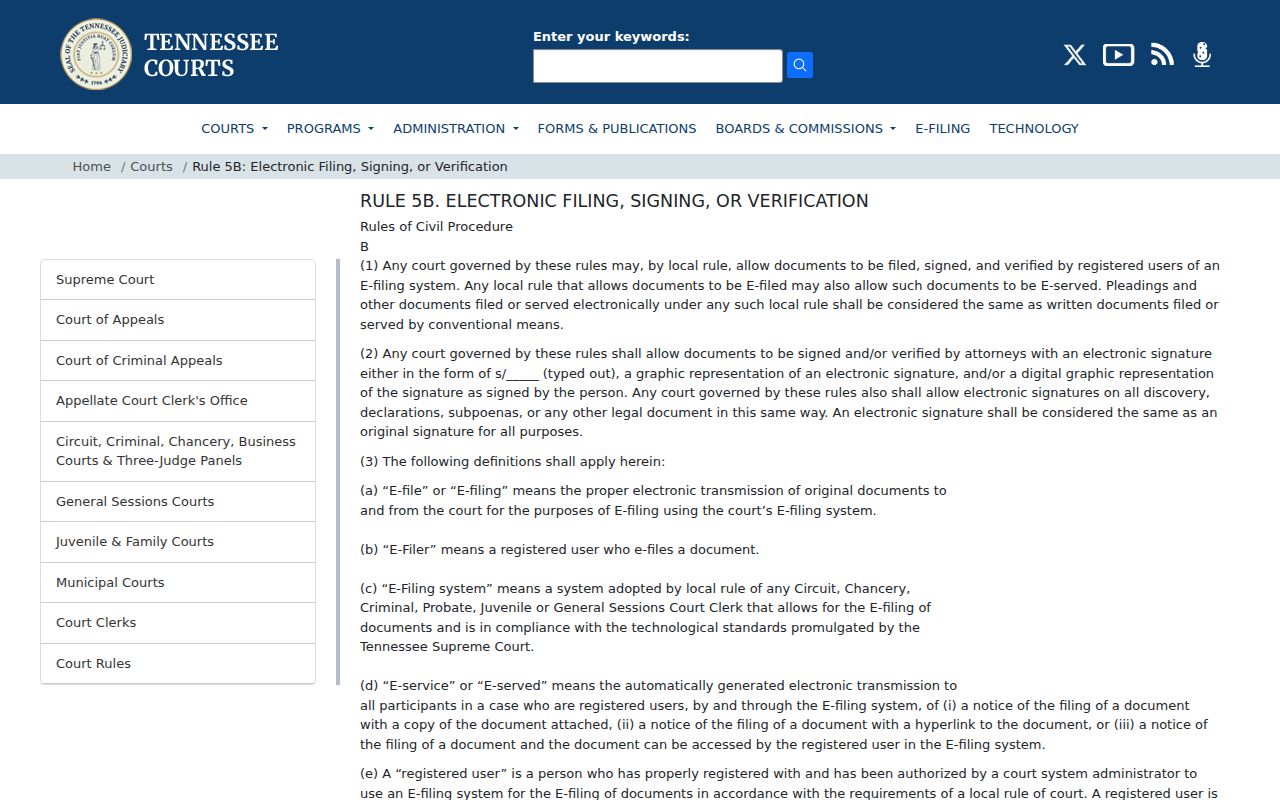
A filer system may require registration. Public inspection happens at a clerk terminal. Ask the Madison clerk which route applies.
Sealed Records and Public Access
Not every court record is open. Tennessee Supreme Court Rule 34 opens most court files to public inspection, but it also honors exceptions that law, rule, or a court order creates. That includes sealed material and protected records. Judges' internal notes, unpublished drafts, deliberative material, recusal information, and internal case-management files can all be withheld. The Tennessee Public Records Act, mainly Tenn. Code Ann. §10-7-503, allows its own lawful exemptions too.
The official Rule 34 text spells out these rules in full.
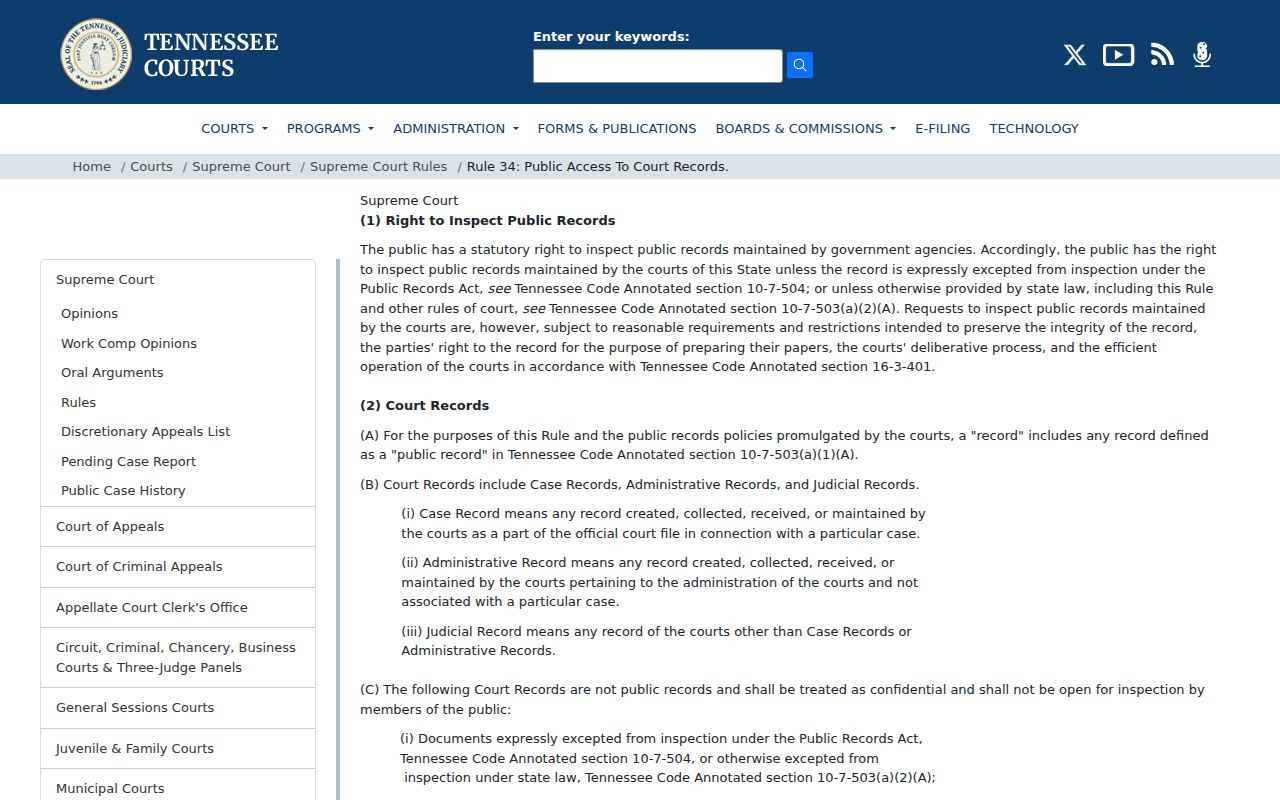
A docket search that comes up empty has several common causes. You may be in the wrong court, the file may sit in old storage, or the entry may be calendar-only with no full case record yet. A search filter can also hide results. Ask the clerk whether the case file is open, redacted, inspection-only, or covered by an order.
Key rules: Rule 34 governs court-record access and exceptions. Tenn. Code Ann. §10-7-503 supports access to existing public records while recognizing lawful limits.
Madison Juvenile Record Access
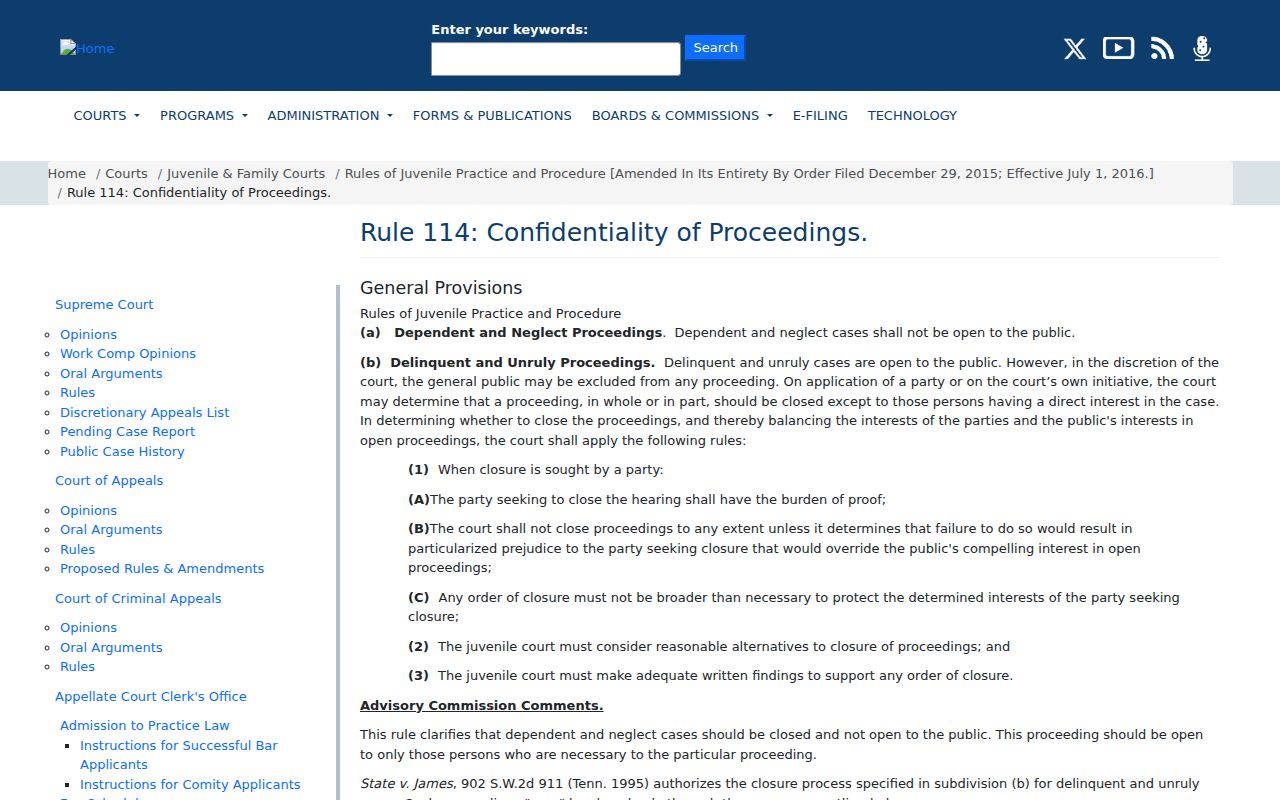
Juvenile files work differently from adult court records in Madison County. Tennessee Supreme Court Rule 114 keeps dependency and neglect matters closed to the public. Delinquent or unruly proceedings can be open in some situations the rule lays out, and a judge may seal a proceeding after making required findings. The Rule 114 page spells out that framework in full.
Call or visit the Juvenile Court Clerk at 110 Irby Street in Jackson before you plan a records request. Ask what can be inspected, what gets redacted, and whether a court order is required, since a certified copy never overrides confidentiality rules.
Madison County Archived Court Records
Older Madison County court records don't vanish. They may sit in storage off site. They may live only on paper, or be reachable just through the records room. Each record type follows its own retention schedule. That means an old court file was probably not destroyed. Minutes, rule dockets, deeds, and plats often stay on permanent or long-term retention. Other records run on shorter schedules. So ask the clerk directly whether what you need is archived, digitized, boxed elsewhere, or open only by scheduled inspection.
An old divorce decree shows how this works. The Madison County Chancery FAQ tells requesters to call the Chancery office. Have the parties' names as they appeared at the time. Bring the best date you can offer. That phone call beats the public Chancery calendar, which the office itself describes as a calendar rather than online case information. Probate takes yet another path, since local probate filing is assigned to General Sessions Division II.
Keep notes when you contact an office. Write down the office, the date, the record you described, and what staff said about where it's stored. If a file needs time to retrieve, ask when to call back and whether inspection must be arranged. Confirm the details before it's pulled. Ask about the per-page copy charge, whether you need a certified copy, how it will be delivered, and what payment the office accepts. Narrow requests prevent mix-ups. A case number works best. Failing that, give the court, division, event type, date range, and document title. That lets the clerk find an existing file rather than build a new one.