
Searching Madison County Civil Dockets
Madison County runs no single civil docket portal covering every trial court. Civil questions in General Sessions go to the General Sessions Clerk at 731-423-6016. Circuit civil records, docket calls, and certified copies come from the Circuit Court Clerk. Call 731-423-6035. Chancery pleadings and calendar events belong to the Clerk and Master at 731-423-6030. Still unsure which office holds the record? The Public Records Request Coordinator takes calls at 731-423-6059 or email at recordsrequest@madisoncountytn.gov.
Before contacting any clerk, gather your facts. Collect the party names, a rough filing date, the case type, and any case number you have. Then pick the channel below that fits your case.
- Route lower-dollar civil, detainer, small-claim, garnishment, and judgment matters to General Sessions.
- Route higher-value civil files and Circuit docket-call records to the Circuit clerk.
- Use the Chancery calendar for date or event discovery, then contact its clerk for case information.
- Ask the office to compare the names, court, division, date, and case number before confirming a match.
- Request the exact order or a certified copy when a calendar or docket entry does not answer the question.
Three Madison County Civil Docket Routes
Jurisdiction decides where a Madison County civil docket lives. The county's own public description draws the line. Under $25,000, a matter goes to General Sessions. That office lists detainers, evictions, small claims, garnishments, and civil judgment payments. Bigger money claims go to Circuit civil, which also posts docket-call calendars. Chancery stands apart entirely, with its own clerk, pleadings, and calendar. The remedy sought and current law can still shift jurisdiction. Treat the dollar summary as a routing clue rather than legal advice.
| Court | Typical local civil work | Access route |
|---|---|---|
| General Sessions | Claims under the county-stated limit, detainers, small claims, garnishments, judgments | General Sessions civil clerk |
| Circuit | Higher-value civil cases, motions, trials, docket calls, certified records | Circuit Court Clerk |
| Chancery | Chancery pleadings, equitable and other Chancery matters, calendar events | Clerk and Master |
The Madison County Chancery records FAQ documents the limits of online case information.
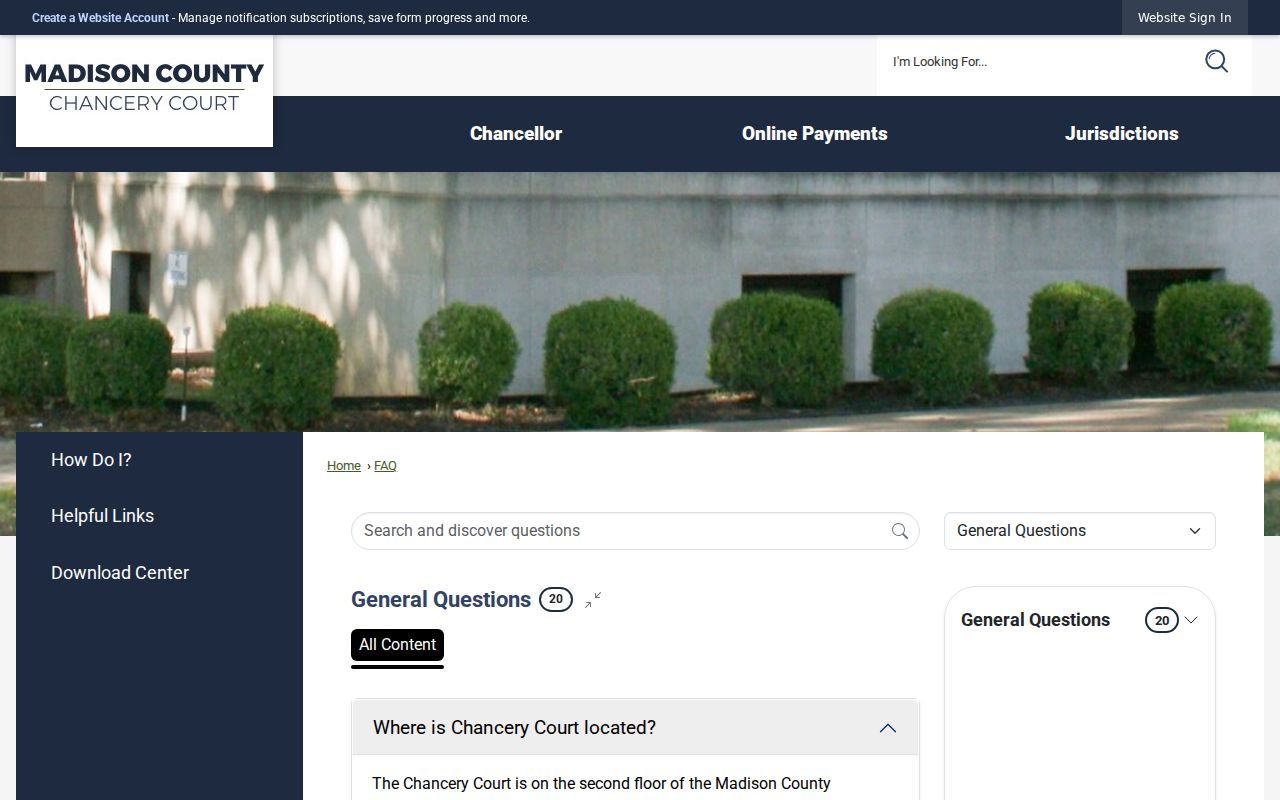
That official source helps keep a Chancery calendar search from being mistaken for a complete Madison County civil case lookup.
Inside a Madison County Civil Docket
A Madison County civil docket can list a lot. Expect the case number, parties, court, and division. Filing dates, service activity, motions, settings, orders, judgment, costs, and appeal events appear too. But the docket is only an index, a procedural history. Behind it sit the complaint or petition, summons and return, answer, and affidavits. Exhibits, motions, discovery filings, and orders are there too. So are cost bills, garnishment or execution papers, and any appellate record. What you can actually see depends on the filing and the court.
| Case number | The court-assigned identifier. No universal Madison County civil format was confirmed in the research. |
|---|---|
| Parties | The formal or abbreviated case style, subject to access and redaction rules. |
| Filings | Entries for pleadings, returns, motions, notices, or other filed papers. |
| Settings | Docket calls, status conferences, motion dates, trials, or other hearings. |
| Orders | Court action on a request or stage of the matter. |
| Judgment | A formal decision that may resolve all or part of the civil case. |
A "motion" entry is a request, not a ruling. Read the motion together with the order that follows it.
Madison County Chancery Calendar Search
The Madison County Chancery Court calendar is the county's clearest public online civil calendar. It gives List, Week, and Month views, plus date-range and phrase search. You can show past events or pick a calendar. Printing, notifications, and iCalendar subscription are options too. One catch: an event may carry an "All Day" label. The plain title reads "Madison County Chancery Court." Only a More Details link expands it.
Search with a narrow date range and an exact phrase. Open the details. Note the title, date, time, and category. A listed event is not a full Madison County civil docket entry. The Chancery FAQ states that internet case information is not available. Pleadings, parties, orders, and complete history must come from the Clerk and Master.
Note: a Chancery calendar event shows a listed setting. It proves no ruling, continuance, dismissal, or full case history.
Civil Case Types on the Docket
The case types on a Madison County civil docket follow the court split. General Sessions records hold small claims. Detainer and eviction proceedings, garnishments, civil judgments, and payments sit there too. Circuit files take the major civil matters above the county-described Sessions limit. Chancery keeps separate pleadings and a calendar for matters within its jurisdiction. Protection-order settings also show up on the county Dockets page. Those files can contain sensitive material. Handle them with care.
- General Sessions civil claims under the county-stated $25,000 threshold
- Detainer, eviction, small-claim, and garnishment records
- Circuit civil complaints, motions, trials, and judgments
- Chancery pleadings, orders, and calendar events
- Protection-order matters, subject to any restriction or redaction
- Probate matters routed locally to General Sessions Division II
Probate is a key Madison County exception. Per the local Chancery FAQ, probate filings go to General Sessions Division II rather than Chancery.
Madison County Civil Calendar Versus File
A calendar and a case file answer different questions. Circuit civil schedules show division, judge, event type, date, and time. The Chancery calendar shows search controls, event titles, categories, and details. Neither one offers a complete public Madison County civil docket. Missing are full party, filing, document, and financial fields.
| Source | Useful for | Does not establish |
|---|---|---|
| Circuit schedule PDF | Division docket-call or motion-calendar planning | A full individual case history |
| Chancery calendar | Date, phrase, category, and event discovery | All pleadings, parties, orders, or outcome |
| Clerk case file | Entries and available source documents | Access to sealed or confidential material |
The difference matters when an event appears or vanishes. A changed calendar proves no continuance or outcome. Ask the right Madison County civil clerk for the current setting and the controlling order.
Civil Docket Settings and Hearings
Madison County local rules lean on docket calls and status conferences. These gauge where a case stands, how ready it is, and what deadlines or trial settings apply. Circuit civil cases should wrap up or reach a trial setting within twelve months of filing. The court can order a shorter or longer period. That standard predicts nothing about your case's actual date. The rules also cover extensions, jury demands, exhibits, and possible dismissal for lack of prosecution.
- Docket call
- A scheduled review used to gauge status, readiness, deadlines, or the need for a trial setting.
- Status conference
- A setting focused on case progress and management rather than a final merits hearing.
- Motion calendar
- A schedule for requests seeking court orders; the calendar does not reveal each request’s merits.
- Continuance
- A hearing or other event moved to another date, normally shown through a later setting or order.
The published 2026 calendars split Division I docket calls from Division II civil motions and docket calls. Under the local rules, counsel must get docket-call dates from the clerk or the judge's secretary. Parties should do the same, confirming any Madison County civil docket setting with the clerk whenever attendance, a filing, or a deadline rides on it.
Requesting Madison County Civil Case Papers
One well-described request can settle the whole question. So be exact about the paper you want. The Circuit certification request asks for a case number. It also wants a clear description of the copies. Whole files, or several files at once, go to the open-records room instead. That distinction matters. It helps the clerk pull the right Madison County civil docket material. It also helps price the work correctly.
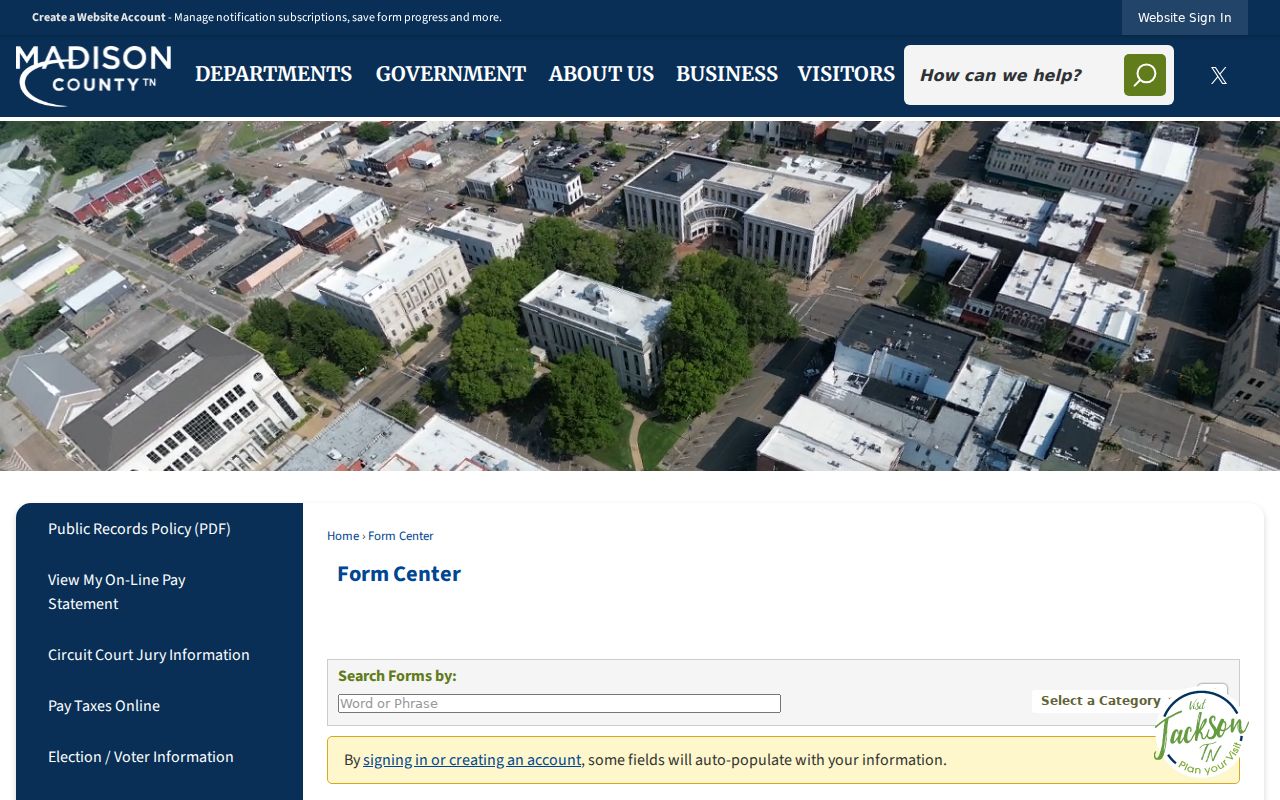
The form makes a simple point. Asking for "all records" gets you less. Naming the complaint, the judgment, an order date, or the cost record gets you more.
A county public-records request should state the court and division. It should also name the case number, the parties, a date range, the exact records wanted, the format, and whether you want inspection or copies. Madison County policy allows an estimate. When production or denial cannot happen promptly, a response form should be used within seven business days. Records tied to one court still tend to move fastest through the direct route to the right clerk.
Civil Docket Access Rules
The public holds a real right to inspect court records. Tennessee Supreme Court Rule 34 spells it out alongside lawful exceptions. Not everything in a file is open. Sealed material and records made confidential by law can be withheld. Drafts, internal judicial notes, deliberative records, recusal material, and internal case-management material can be withheld too. The Tennessee Public Records Act at Tenn. Code Ann. §10-7-503 adds its own layer of limits. Statutes, rules, orders, common law, and federal law each play a part. Together they shape what a docket search returns.
Access check: Ask whether the Madison County civil docket item is open, partially open with redactions, available only for inspection, or restricted by an order or law. A certified-copy request does not remove a restriction.
An empty online result is rarely the final word. It may mean the wrong court was searched. Or the event lives only on a calendar. The file could be old, undigitized, or restricted. The query may have been cast too wide. None of that proves the civil case does not exist. Ask the clerk, who can name the reason without revealing protected content.
Madison County Sessions Civil Records
A Madison County civil docket can involve a detainer, eviction, small claim, garnishment, judgment, or payment. For those, General Sessions is often the smart first stop. Its civil division answers on a phone line separate from criminal and traffic. A civil summons matter is generally set Monday morning at 9:30 a.m. per the county Dockets page. Trust the individual summons, notice, or later order over the general rule. That paper controls the actual setting.
Costs and fines have their own paper path. The official General Sessions certification form gives a direct channel for requesting those records.
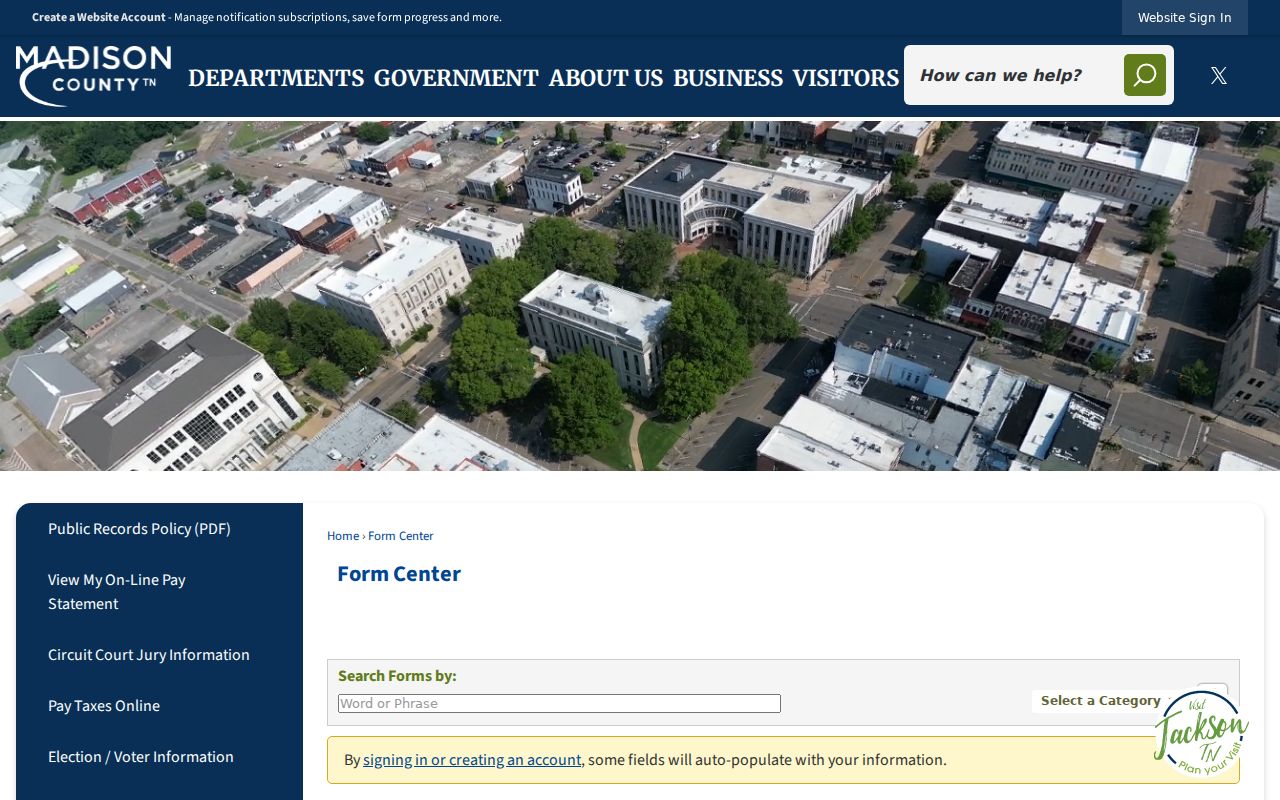
This request is narrower than a full civil file. Name the specific record. Then confirm the civil division actually holds it. Another Sessions function may hold it instead.
Ten days is the window. Under the county's public instructions, a civil judgment defendant has that long. The defendant can arrange payment with the plaintiff or file an installment motion. A case order or later setting can change things. Because of that, take questions about a live Madison County civil docket straight to the clerk. Do not rely on a saved copy of the general instructions.