
How to Search Cases by Name
Searching by name works well for Tennessee appellate histories. Local trial dockets are another story. Madison County offers no single official public portal for them. First, sort the matter into a lane. Options include Circuit/Criminal, General Sessions, Chancery, Juvenile/Probate, Jackson City Court, appellate, or federal. That choice tells you which clerk to call. A clerk searching a trial file also works far better when the name comes with a year, a division, or a record type attached.
- Read the court name on a citation, summons, order, notice, or prior filing.
- Normalize the party name and note any former spelling, business name, or middle initial.
- Add the case type, approximate filing year, judge or division, and known date.
- Use the matching official calendar only for a setting, or ask the clerk for a case-level record search.
- Open the matching result and compare identifiers before relying on the docket.
Tennessee Public Case History uses one required search term and a selected mode.
| Field Label | Type | Required | Notes |
|---|---|---|---|
| Enter Search Term | Text | Yes | A blank entry produces a validation message. |
| Case Number | Radio mode | Choose one | Uses the appellate identifier. |
| Case Style | Radio mode | Choose one | Searches the formal caption. |
| Party Name | Radio mode | Choose one | Searches a named party. |
| Business/Organization | Radio mode | Choose one | Searches an entity name. |
Madison County Search Channels
No public portal spans every Madison County trial court. Circuit Court offers two public-access computers plus a records-room route. The Chancery FAQ states plainly that internet case information is not available. General Sessions publishes docket times, and Jackson City Court posts dated docket PDFs. Each channel answers a different question about the court docket.
That split matters more than it sounds. A calendar shows when an event is set. A docket PDF may add settings or short status notes. A clerk's register goes deeper, listing filings, orders, judgments, costs, and other procedural acts, while a certified-copy form requests a known record and CourtFeePay handles payments. None of these should be mistaken for a universal Madison County case lookup.
Key point: Select the court first, then choose its calendar, clerk, docket library, records room, or appellate search.
How to Search by Case Number
A full case number is usually the strongest identifier you can bring. Give the clerk the number exactly as printed, court and type segments included. Jackson City Court docket samples follow a pattern like 57CT1-2025-CR-####. The same docket may also list a companion number in a form such as 2025M-####. Treat both as format examples only, not real reproduced cases.
Never force a local number into the appellate search. Public Case History keeps its own appellate case number separate from the trial-court number. If a form rejects what you typed, ask a few things. Should the punctuation come out? Does the matter carry a later appellate number? Is the record indexed under another court? Note that the Circuit and General Sessions certification forms each ask for their own court case number. Treat each form the same way.
Madison County Appellate Lookup
Tennessee Public Case History covers three courts. Those are the Tennessee Supreme Court, the Court of Appeals, and the Court of Criminal Appeals. The official description says it is current through the prior business day. It does not search every Madison County Circuit, General Sessions, Chancery, Juvenile, or city matter. A local case shows up there only after a certain point. It must reach one of the covered appellate courts first. The official appellate search screen displays these courts and its search options.
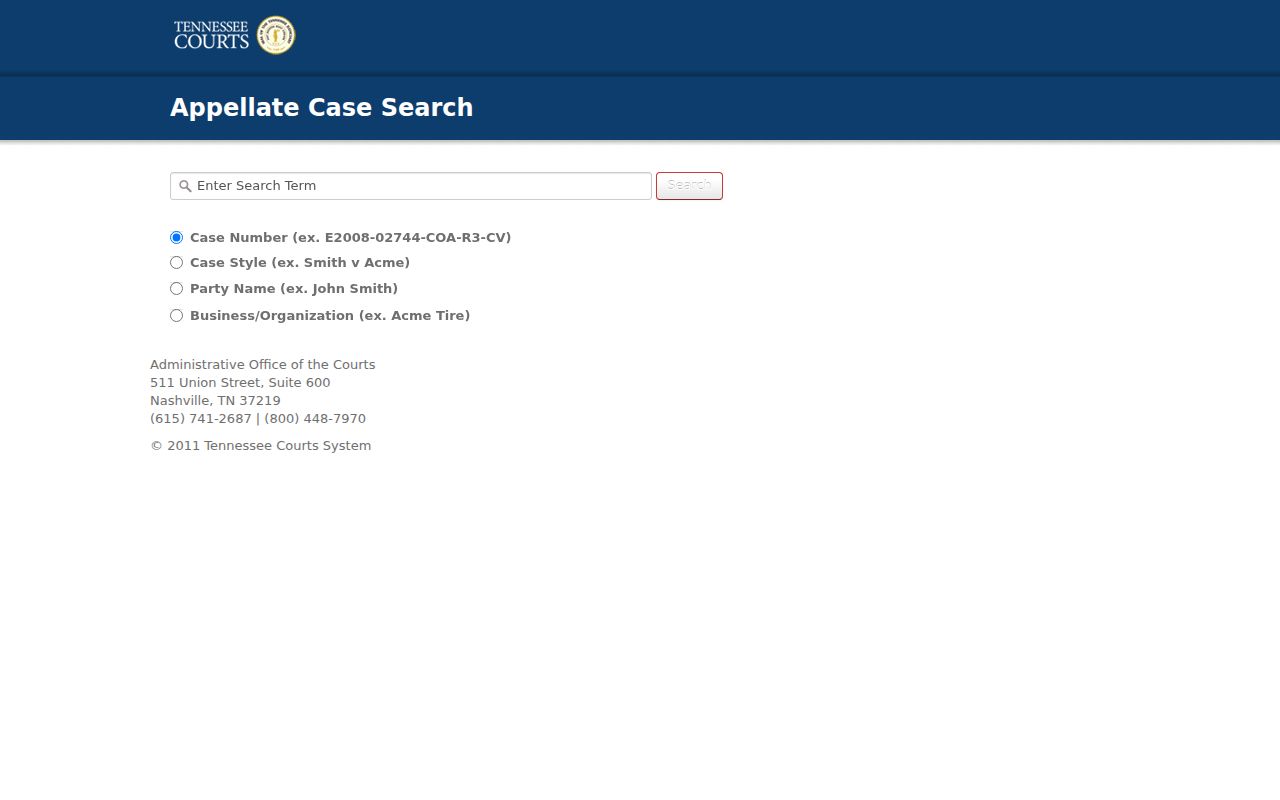
Its search modes serve that appellate purpose well. They do not turn the site into a county trial-court database.
The courts also publish Public Case History help.
The help page explains coverage, update timing, and document limits for each result.
What a Case Search Shows
An appellate detail page can carry several layers of procedural data. Local Madison County records may use other layouts entirely. Compare the caption and trial-court number before trusting that a result is the case you meant.
| Case Number | The appellate identifier used by Public Case History. |
|---|---|
| Style / Parties | The caption and permitted public party information. |
| Trial Court | The court from which the appeal came. |
| Trial-Court Number | The distinct local identifier tied to the underlying case. |
| Milestones | Record, briefing, application, decision, disposition, and closure events. |
| Document History | Listed filings and links to public PDFs when permitted and migrated. |
The detail page splits Case Overview, Case Milestones, Parties, Document History, and Record Information into tabs.
Madison County Appellate Details
The five-tab layout answers different questions without blending them. Overview confirms the basic identity. Milestones track procedural stages. Parties name public participant categories, Document History lists available items, and Record Information describes the transmitted record. A missing PDF does not mean no filing exists, since migration dates and access rules affect what appears. An official sample detail page illustrates these tabs along with the manifest.
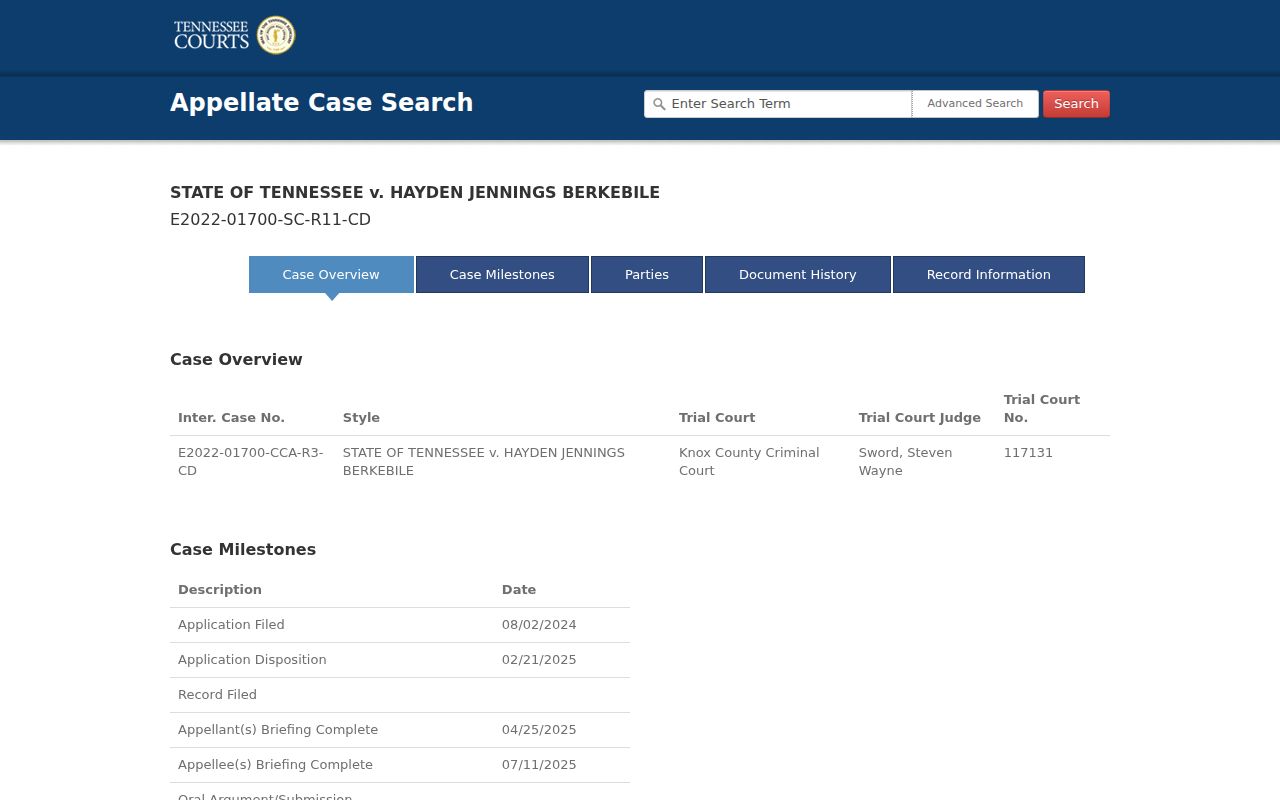
Those fields show a trial number and appellate number coexisting, which is why both should be recorded.
County vs Statewide Case Search
"Statewide" can mislead here. Tennessee's public search is statewide only across its covered appellate courts, not across all trial dockets. Madison County trial records stay divided by court and custodian, so pick a channel based on the record level rather than convenience.
| Point | Tennessee Public Case History | Madison County channels |
|---|---|---|
| Coverage | State appellate courts | Specific local court or division |
| Best identifier | Appellate number, style, party, or organization | Local case or citation number, court, year, division |
| Depth | Milestones and permitted documents | Calendar, docket, register, or clerk file by channel |
| Fallback | Appellate clerk and help material | Correct local clerk, counter, records room, or request form |
Federal cases take a third route. The official PACER service searches federal dockets and documents, including matters in the Western District of Tennessee.
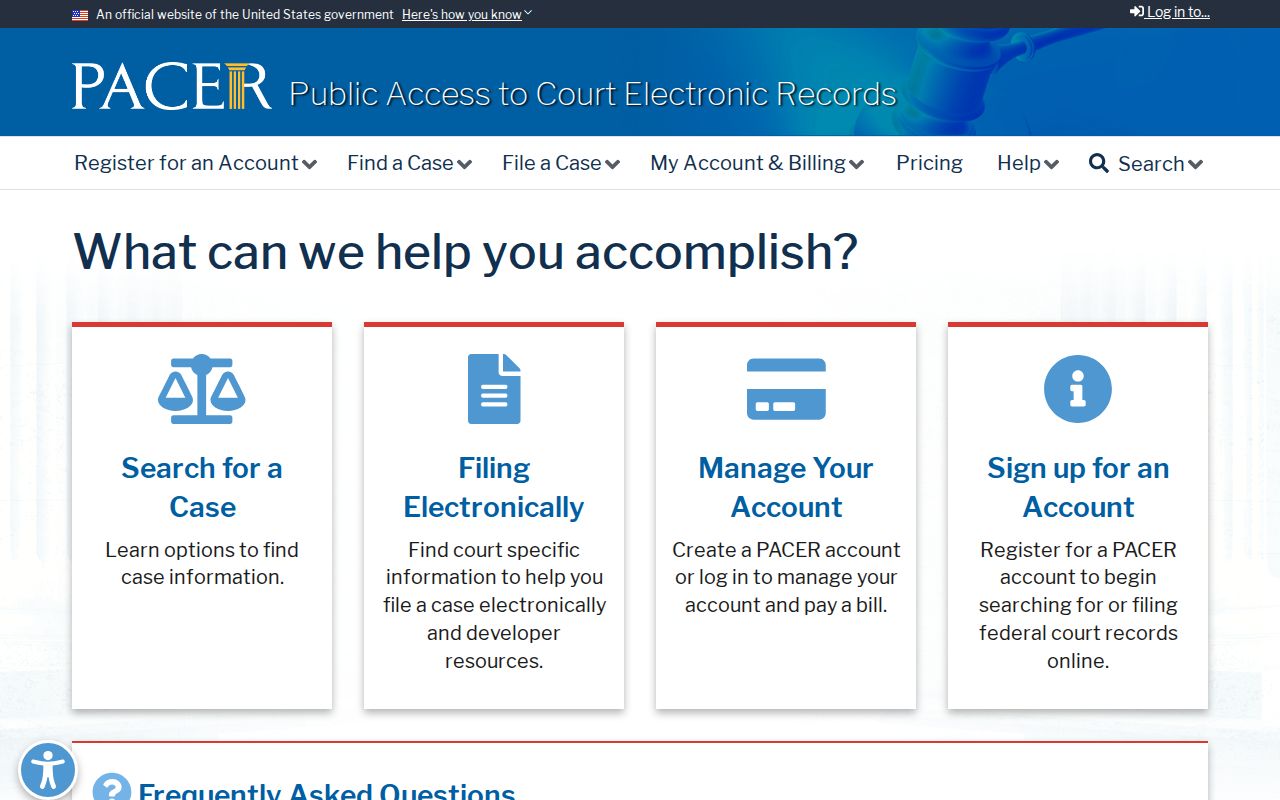
PACER should not be used for a Tennessee state trial or appellate file.
Recover a Madison County Search
A blank result is not the end. It could point to the wrong court. It could also mean a thin identifier, an old file, a portal limit, a record not yet moved into the system, or restricted access. Start by confirming the court level. Probate in Madison County sits with General Sessions Division II, so do not assume Chancery. A Jackson City matter may not show up in a General Sessions source. A Circuit case stays out of Public Case History unless it reached an appellate court.
Next, call the right clerk. Ask how the docket is indexed there. It may run by case number, citation, style, filing year, division, or date. Ask whether older material sits off-site and whether you can inspect it. For a precise file or a specific order, follow the request process for that court. The Madison County court record search page explains how the document layer differs from a docket lookup result.
Note: An empty online result is a prompt to verify the court and the office that holds the record. It is not proof that a case never existed.
Madison County Payment Tools
The county points to CourtFeePay for payments. That tool is not a docket search, a case register, an e-filing system, or a full copy of the file. A payment match can help route an existing obligation. It cannot show every event or document in a Madison County case. The official page displays the payment interface you will use.
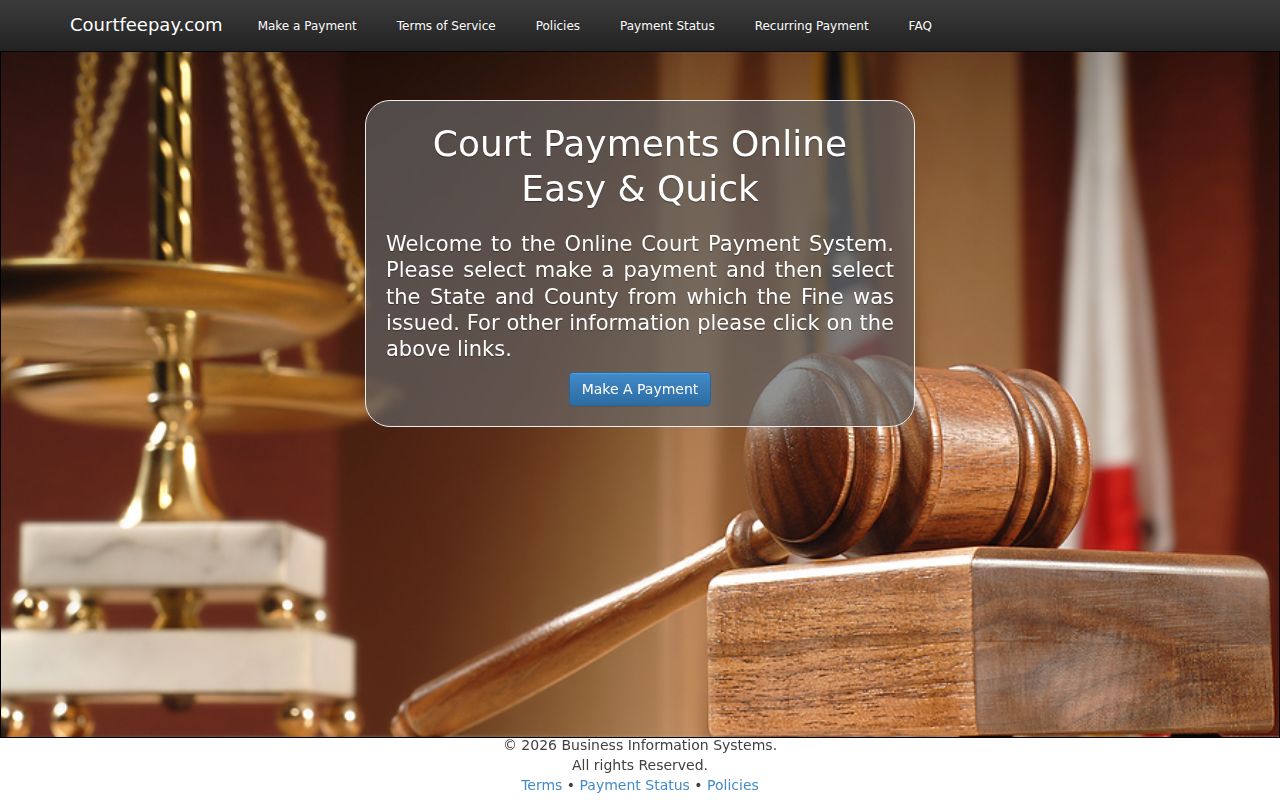
Keep payment and record searches apart. That habit stops a balance screen from being mistaken for the court's official procedural history of a Madison County case.
Restricted Cases and Access Rules
Public access has limits. Tennessee Supreme Court Rule 34 allows public inspection of court records. But it excludes or limits sealed and protected material, confidential records, drafts, internal judicial notes, deliberative material, recusal material, and internal case-management data. A court order or another law can restrict access too.
Juvenile dependency and neglect cases carry special confidentiality rules. Adoption pleadings and other confidential Chancery filings may be closed as well. An expunged or sealed entry may not appear in any public docket. Ask the clerk about the record. It may be open, partly open with redactions, inspection-only, or gated by court order. Sealed material may require action by the issuing court before anyone sees it.
The clerk can release only what the law allows. A certified-copy request does not override a restriction. A missing public entry says nothing about what another agency may lawfully retain.